

The Urgency of an Educational Reform Focused on Entrepreneurship and Innovation
Faced with the challenges of the 21st century, there is a consensus on the need to reform Benin’s education system to align it with the demands of innovation and entrepreneurship.
The Sectoral Education Plan (2018-2030) aims to train, by 2030, competent, competitive citizens who drive economic growth through entrepreneurial skills integrated into curricula. However, despite government initiatives, a gap remains: Benin’s overly theoretical education system hinders the development of an entrepreneurial culture among young people.
The CACEPI Label: An Alliance for Entrepreneurial Education
In this context, key stakeholders in Benin’s entrepreneurship sector have proposed a concrete solution to accelerate change: the creation of the CACEPI Label - Certificate of Attestation for Pro-Innovation Education Centers.
• ADPME, Agency for the Development and Promotion of Small and Medium Enterprises.
• AnpE, National Employment Agency.
• The three consular chambers: CCI, CMA, CNA.
• The National Federation of Parents’ Associations of Students in Benin.
• The Union of Media Professionals of Benin, UPMB.
• ReNEJ, National Network of Civil Society for the Promotion of Youth Entrepreneurship and Employment.
What are the objectives of the CACEPI Label?
• To recognize and encourage schools and universities that actively promote initiative, innovation, and change-driven behaviors.
• To transform mindsets by integrating entrepreneurial culture from the school benches, involving teachers, students, and parents.
A Mechanism to Support and Recognize Best Educational and Pedagogical Practices for Committed Stakeholders
Concretely, the CACEPI Label will reward institutions that actively integrate entrepreneurship and innovation into their teaching approach. The goal is to create an environment where change-agent behaviors are valued, and young learners are prepared to become key players in Benin’s economic development.
Multiple Workshops and Meetings to Implement the CACEPI Label in 2025 and 2026
To ensure national ownership of the label and the establishment of the first cohort of Pilot Educational Centers (PECs), several meetings have already been organized:
• July 14-15, 2025, in Porto Novo:
A workshop to present the label, ensuring national ownership, strong institutional commitment, and enabling stakeholders from the educational, entrepreneurial, academic, institutional, and civil society sectors to build a roadmap.
• September 17-18, 2025, in Ouidah:
A reflection and co-construction workshop on the label’s deployment to establish a solid and inclusive operational framework. Topics included: selection mechanisms for Educational Centers (ECs), methodological tools, role distribution, operational roadmap, eligibility criteria, and support modalities.
• November 3-5, 2025, in Porto Novo:
A workshop to select the first cohort of 17 beneficiary ECs and launch their support in the labeling process. This meeting initiated technical and pedagogical support for a gradual transformation toward learning environments conducive to innovation and entrepreneurship. Discussions covered: the label’s governance framework, roadmaps for Upgrading Guides (UGs), EC diagnostics, and the development of a skills directory for each stakeholder.
• November 24-25, 2025, in Ouidah:
A training seminar for Technical Evaluation Committees (TECs), key actors in the labeling process, responsible for analyzing, evaluating, and consolidating the educational quality of candidate centers. This session strengthened their technical, methodological, and operational capacities before the start of evaluation missions.
• December 16-18, 2025, in Ouidah:
Training for ECs on the CACEPI Label. This meeting trained UGs (2 guides per EC), who are the main relays responsible for supporting the pedagogical and organizational transformation required by the label. Topics included: roles and responsibilities, tools, appropriation of criteria, mobilization of teachers and learners, activity organization, monitoring and data collection, and preparation of ECs for evaluations.
• January 19-23, 2026, in Cotonou, Akpakpa, Akassato, Abomey-Calavi, Missérété, Porto Novo, Djéregbé, Lokossa, Dogbo, Parakou:
Site visits for the diagnosis of candidate ECs. These visits assessed the actual situation of each EC based on the 10 label criteria, identified gaps, best practices, and specific needs to guide technical support. Each EC now has a personalized diagnostic report, knows its level of compliance with the criteria, and understands its strengths and weaknesses, enabling them to build a roadmap with the UGs.
Toward a Transformative and Inclusive Education
The CACEPI Label will offer multiple benefits to labeled ECs:
• Recognition and distinction for greater visibility and attractiveness.
• Membership in a network of excellence.
• Motivation and engagement of teachers and learners.
• Capacity building.
• Better professional integration for students.
• Institutional support and access to partnerships.
« This label is crucial because it bridges the gap between theory and practice by valuing local initiatives, creates an ecosystem conducive to entrepreneurship from a young age, and strengthens collaboration between educational, institutional, and private actors. »


THE LIVING TAPESTRY: a new animated short film celebrates the Women shaping Africa's entrepreneurial future
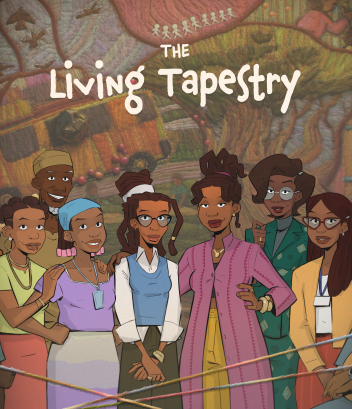 Triggerfish Animation Studio, Goon Valley Animation Studio, and the European Union’s Team Europe Initiative – Investing in Young Businesses in Africa #TEIIYBA, are proud to announce the forthcoming release of The Living Tapestry, a pan-African animated short film with a social mission. The f...
KENYA - Biashara Pawa Awards celebrate women and youth entrepreneurs transforming underrepresented sectors
 Celebrate entrepreneurial excellence, community impact, innovation, and leadership After months of dialogue, mentorship, networking, and learning, the Biashara Pawa Awards provided an opportunity to recognise the women and youth entrepreneurs who are redefining what is possible in sectors wher...
Demo Days 2026: from capacity building to market readiness for green industries in Africa
 From strengthening ESOs to preparing African green businesses for regional expansion Across Africa, green startups and SMEs are developing innovative solutions in renewable energy, sustainable agriculture, waste management, water, clean technologies and other emerging green sectors.
Benin-Togo Exchange Visit: Strengthening Regional Entrepreneurship Cooperation
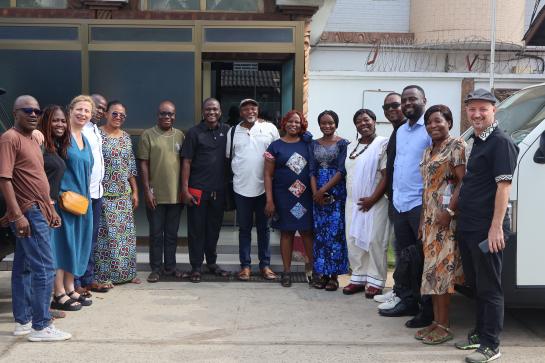 From May 18 to 22, 2026, the IYBA-SEED Benin and IYBA-SEED Togo teams invited a delegation of actors from Benin's entrepreneurial ecosystem to take part in an exchange visit between Kara and Lomé, Togo.


