
This guide provides practical guidance for designing and reviewing communication materials used in programmes, financial services and ecosystem initiatives.

Inclusive communication: a practical guide to help women entrepreneurs see themselves in your messages
What if your calls for applications, posters or the way you promote your financial products were unintentionally turning away some of the very women who make up your target audience?
The IYBA SEED programme has published a new guide, Inclusive communication for women’s access to finance & ecosystem strengthening, a 24-page practical guide by gender expert Susana Martinez-Restrepo, PhD.
Why this guide?
Research on gender-fair language and on the imagery of entrepreneurship points in the same direction. Masculine defaults and stereotyped depictions trigger predominantly male mental images and weaken women’s sense of legitimacy in leadership and management roles. Older women, and women working in technology and capital-intensive sectors, remain largely under-represented, and AI-generated images tend to amplify these biases.
As a result, many fully qualified women entrepreneurs opt out of opportunities that are in fact designed for them. Conversely, when communication materials show diverse women as founders, managers and experts in manufacturing, logistics, ICT, construction or renewable energy, their willingness to apply and to seek finance increases.
Communication is never neutral: it determines who feels entitled to apply, to step forward or to ask for funding
We designed this practical guide as a continuation of the work carried out with our ecosystem partners in the programme’s five countries.
The guide is built around three simple questions to ask before anything goes out:
- Which women are we showing, and in what roles?
It is not enough for women to be visible: what matters is which women are shown, and in what roles. The guide challenges recurring clichés and offers concrete recommendations. - Are women explicitly addressed?
The guide offers recommendations in English, French and Spanish, as well as in Swahili, Ewe and Wolof. These languages have no grammatical gender, so bias can lie elsewhere, for example in the way women’s work is described. - What story are we telling?
A text can be grammatically inclusive and still exclude if it emphasises sacrifice or exceptionality rather than expertise. The guide reviews five concrete situations (an event invitation, a panel, training in a male-dominated sector, business environment reform, a financial product) and offers alternative wording for each.
This guide is intended for financial institutions, business support organisations, public authorities and programme communication teams who wish to encourage more women to take up the opportunities they offer. It concludes with a 12-question checklist that takes just a few minutes to use when designing or reviewing a poster, a call for applications or a brochure before it is published.
Inclusive communication for women's access to finance and ecosystem strengthening
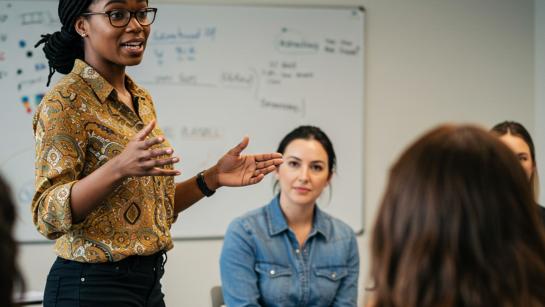
This guide provides practical guidance for designing and reviewing communication materials used in programmes, financial services and ecosystem initiatives.
WEBINAR #6 Peer exchange on Investment Readiness for Early-Stage Businesses

The peer exchange explored what makes early-stage businesses genuinely ready to access finance, drawing on the perspectives of a commercial bank, an investor, and participating ESOs.
Assessment on the appropriateness of available financial services in the Kenyan market for SEED beneficiaries

Discover our latest study, carried out by the IYBA SEED team in Kenya in partnership with Intellecap, a comprehensive assessment of the Kenyan financial services landscape, spotlighting the gaps that keep early-stage businesses, youth, and women entrepreneurs from accessing the capital they need to grow.
KENYA- Policies brief - Kisumu County launches Landmark Trade, Cooperative and Local Enterprise Policies
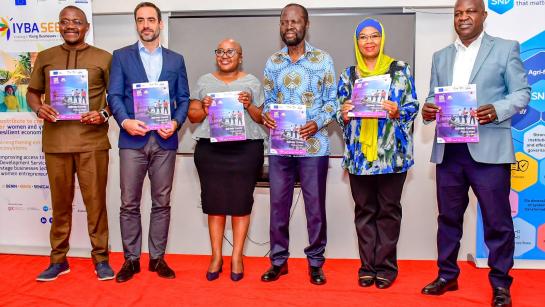
The Kisumu policies, now consolidated into a document, provide a roadmap to ecosystem actors and entrepreneurs for supporting local producers, enhancing market access, promoting local procurement, and building stronger, more resilient enterprises across Kisumu County.


